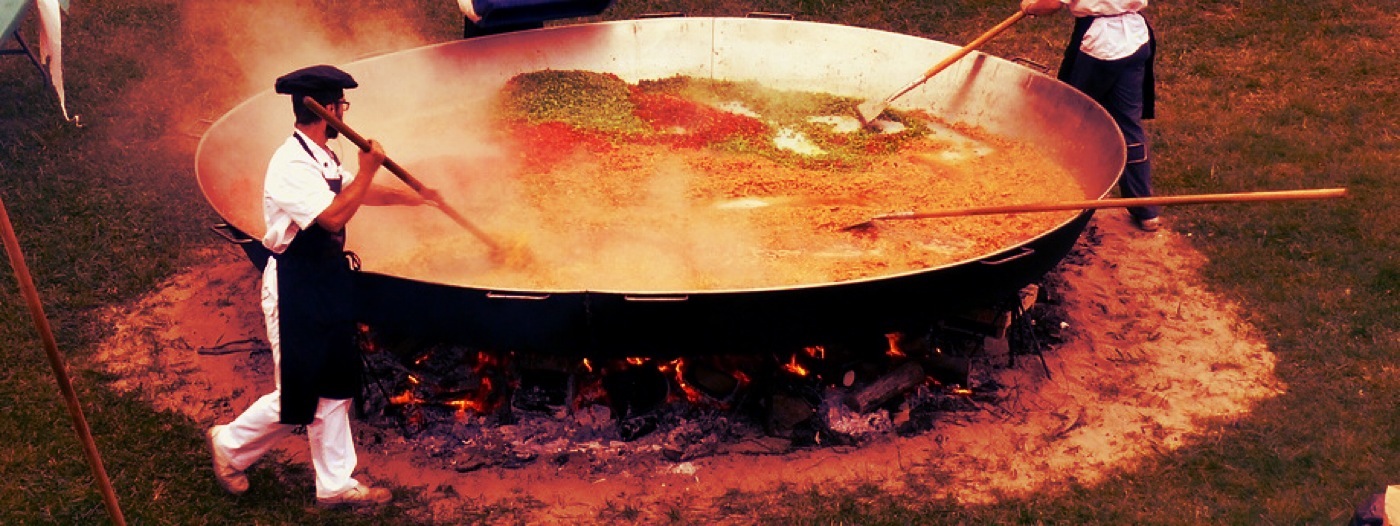
Some assembly required. Many cultures have a festival dish that is something wrapped in dough that can be stored and then cooked quickly (so the moms can enjoy the festivals). The Hispanic countries have tamales, the Asians have jiaozi (pork dumplings) and the Eastern Europeans have perogi. However the price for this festival freedom is sometimes days of preparation. Making the dough, the filling(s) and assembling the final product are painstaking tasks. Usually this is made easier by making it a group activity. In China we would be treated to jiaozi parties. Our host would bring over the prepared meat and dough and then everyone would pitch in to make (and eat) the jiaozi. For a fun idea of how the Mexican culture does this, I recommend the children’s book Too Many Tamales! (for the hearing impared.)
Jan and I were watching Triple D and one of the featured restaurants was a Mexican place that always has 15 different moles. Jan loves mole and the show expanded my mind on what was possible in the way of mole and how to use it. One of their signature dishes was tamales with mole.

Karl’s Pork Tamales with Mole Poblano
Karl’s Green Mole Rice
Karl’s Refried Beans II
I have made tamales before, but I have usually bought pre-made masa from the local Hispanic store, Chavez Market. Their masa makes really good tamales, but I know from the layer of fat that is left behind in the steamer that they are using a traditional recipe (read: lots of lard). I decided to try to make something that tasted as good, but with less fat for Jan. A traditional masa recipe calls for ¾ of a cup of lard. I am going to try cutting this down 1/3 of a cup, but I am using the lard left over from de-fatting the pork roast I made this week. These may not be as tender, but I hope the boost flavor will more than compensate.
Masa harina looks like white corn meal, but is actually a very processed product. White corn is soaked in lime to remove the hull, cooked, washed, dried, and then ground. You then add lard, salt, and water/broth to make dough to be a base for wonderful things.
This recipe makes a lot of tamales. If you are not feeding a crowd, you may freeze some of them after assembly to steam for another meal.
Karl’s Pork Tamales with Mole Poblano
Ingredients
Makes about 20-25 tamales
Masa
3 cups masa harina
1/3 cup shortening (Crisco Vegetable Lard or pork)
¾ tsp. baking powder
1 tsp. salt
3 cups pork broth (or low sodium chicken broth)
Pork Filling
1 Tbs. corn oil or pork lard
½ medium onion, diced fine
1 Serrano chili, diced fine
4 cloves garlic, crushed
½ cup chicken broth or beer
2 tsp. tomato paste
2 tsp. cumin seeds, coarsely ground
1 tsp. Ancho chili powder
1 tsp. Mexican oregano ((lemon verbena)
½ tsp. salt
1 lb. Karl’s Slow roasted Pork, pulled or shredded
30 dried corn husks (about 8 inches long)
2 cups Karl’s Mole Poblano
Directions
Masa
1. Beat shortening on medium speed in a large bowl for 1 minute.
2. In a separate bowl, stir together masa harina, baking powder and salt.
3. Add part of the masa harina mixture and then the broth to the shortening. Beat well after each addition. Continue until all of the masa harina is added and then add just enough broth to make a thick, creamy paste. Let the masa rest for at least 20 minutes.
Filling
4. In a large skillet sauté the onions in the oil (or fat) until translucent.
5. Add the chili and garlic, sauté 2 minutes more.
6. Add the liquid, tomato paste, cumin, chili powder, oregano, and salt. Stir to combine and cook for another minute.
7. Add the pork and continue cooking, stirring occasionally, until most of the liquid has been absorbed.
8. Remove the skillet from the heat and let the contents cool.
Assembling the tamales
9. While the pork filling is cooling, soak the corn husks in warm water for 20 minutes. Rinse to remove any corn silk and drain well.
10. Take a large corn husk (or overlap two smaller ones) and place about two tablespoons of masa in the center.
11. Spread the masa into a thin, roughly rectangular layer (toward the top and one edge of the corn husk).
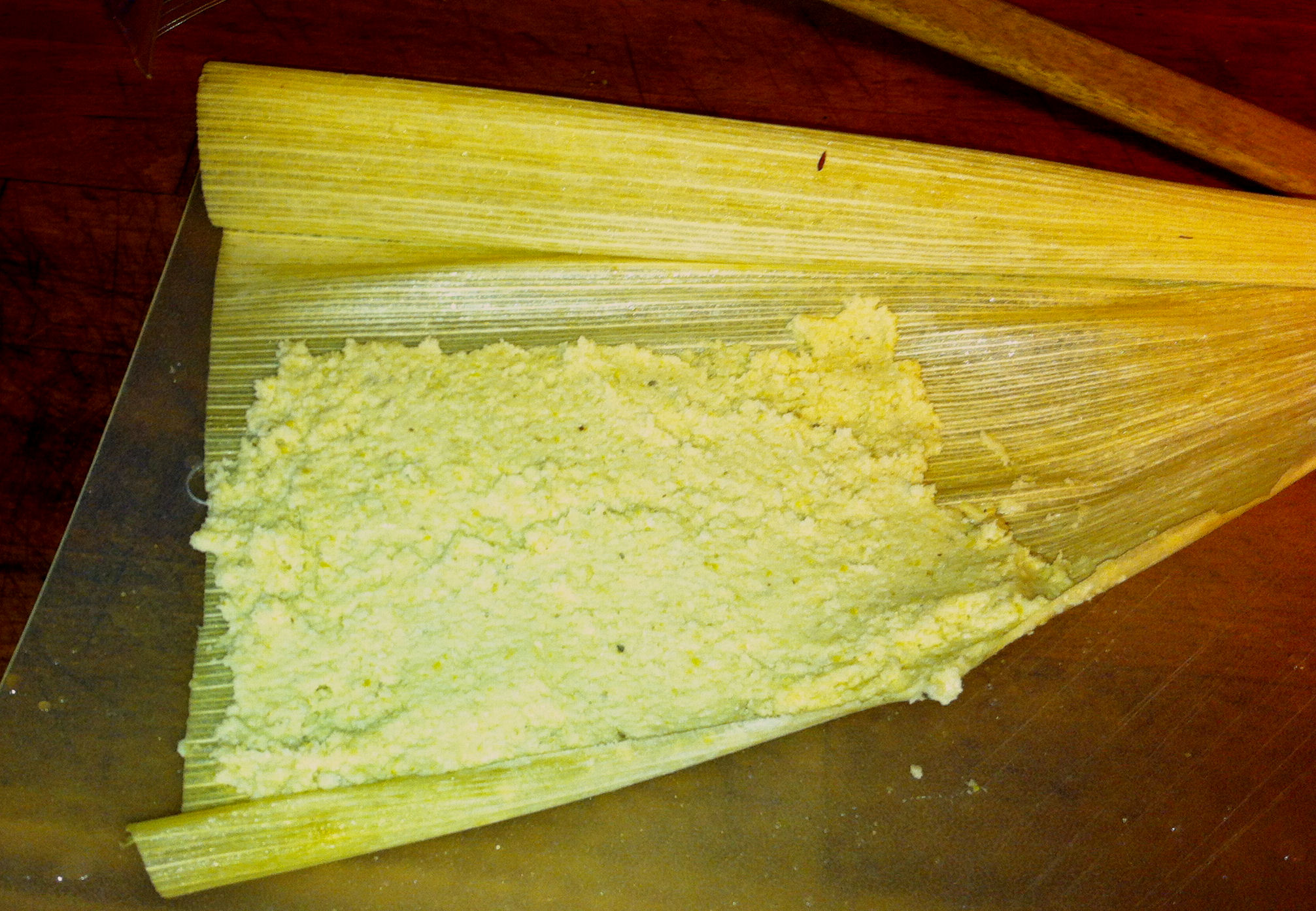
Spread the Masa
Tip 1: Have a bowl of water on hand to dip your fingers in. The masa can be stick and slightly wet fingers makes it easier.
Tip 2: The corn husks are very strong in one direction and very fragile in the other. When you are distributing the masa across the husk out be very gentle when spreading across the husk or it will split.
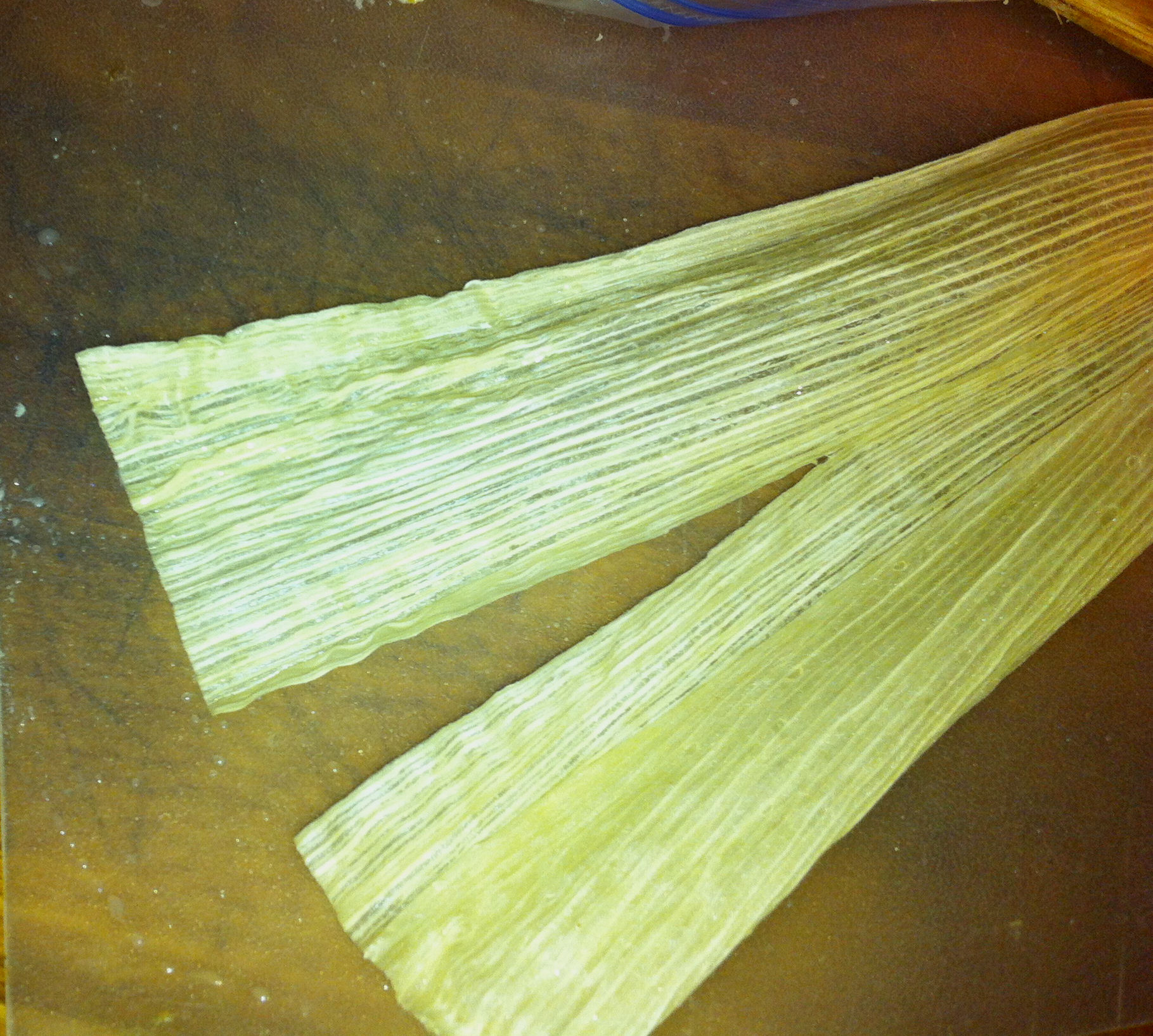
Strong one way,
Weak the other
Tip 3: Do not roll the husks too tightly. The masa will expand slightly as it cooks.
12. Spoon about 1 tablespoon of your filling onto the masa rectangle and poke it into a strip down the middle of the long axis.
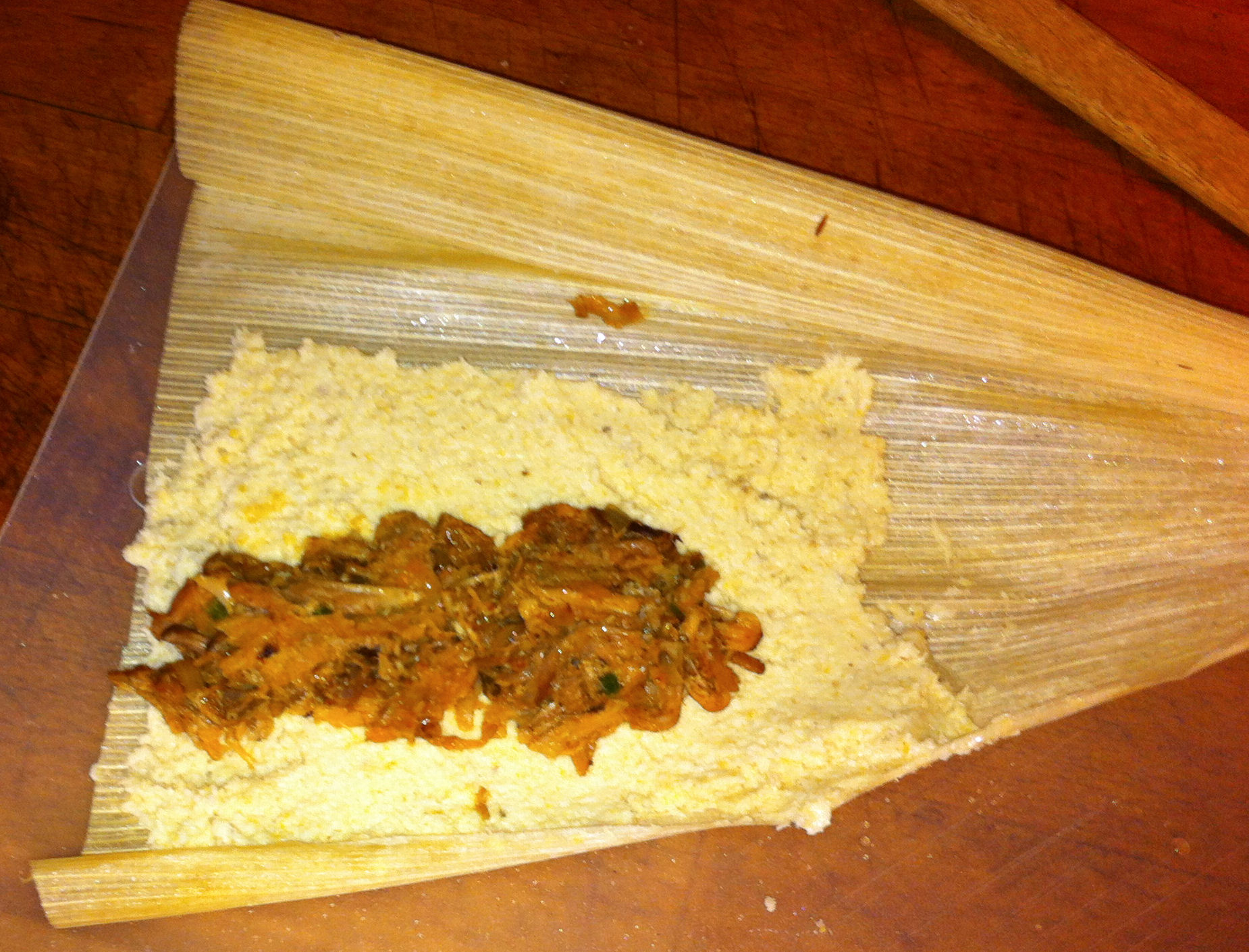
Place the Filling
13. Start with the edge of the husk that is covered in masa and roll the corn husk over the filling into a cylinder.
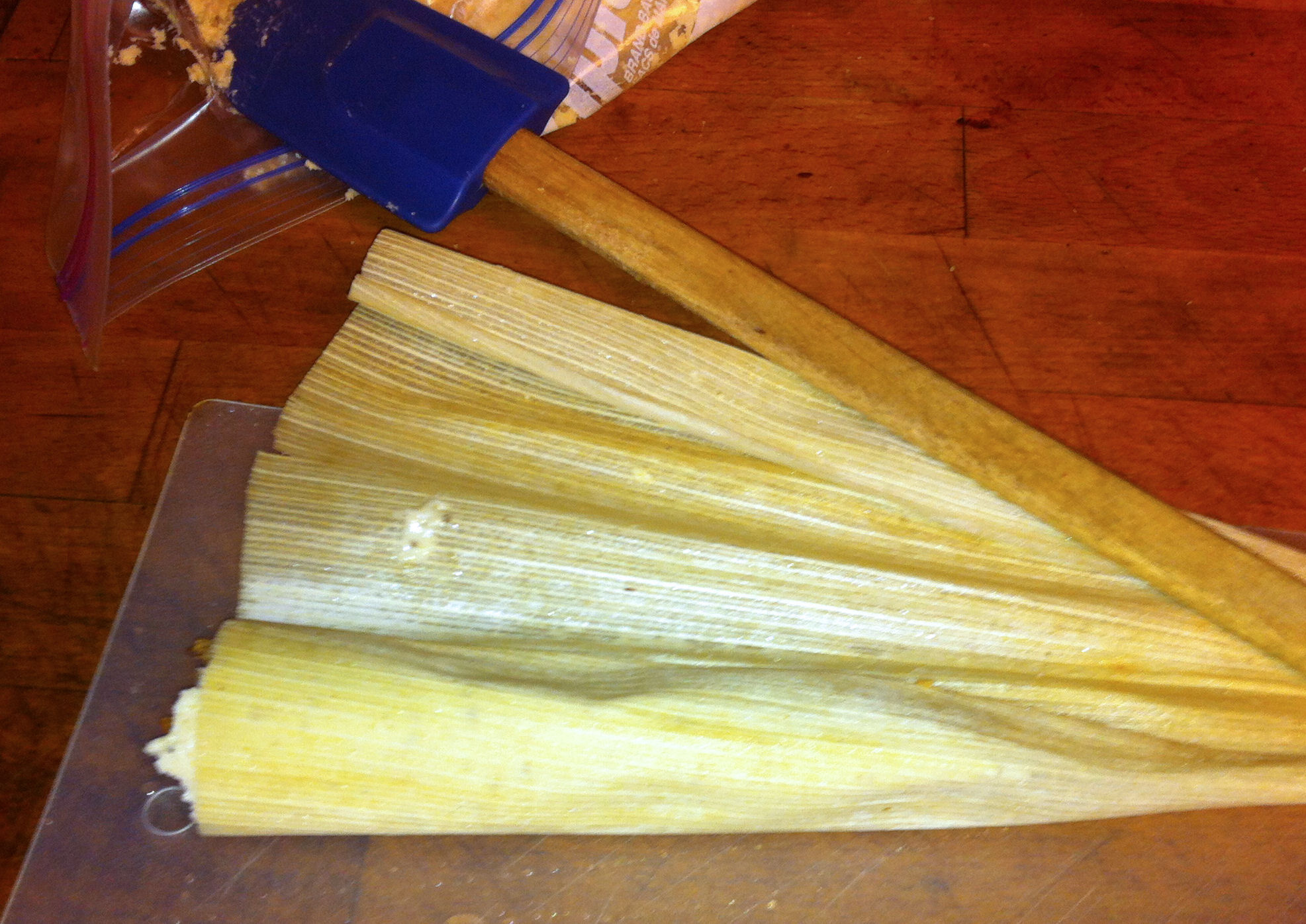
Roll the Tamale
14. Fold the bottom of the corn husk up and lay the tamale so that the fold is facing down.

Fold the End
15. Continue until you are out of filling, masa, or corn husks and you have a neat pile of tamales.
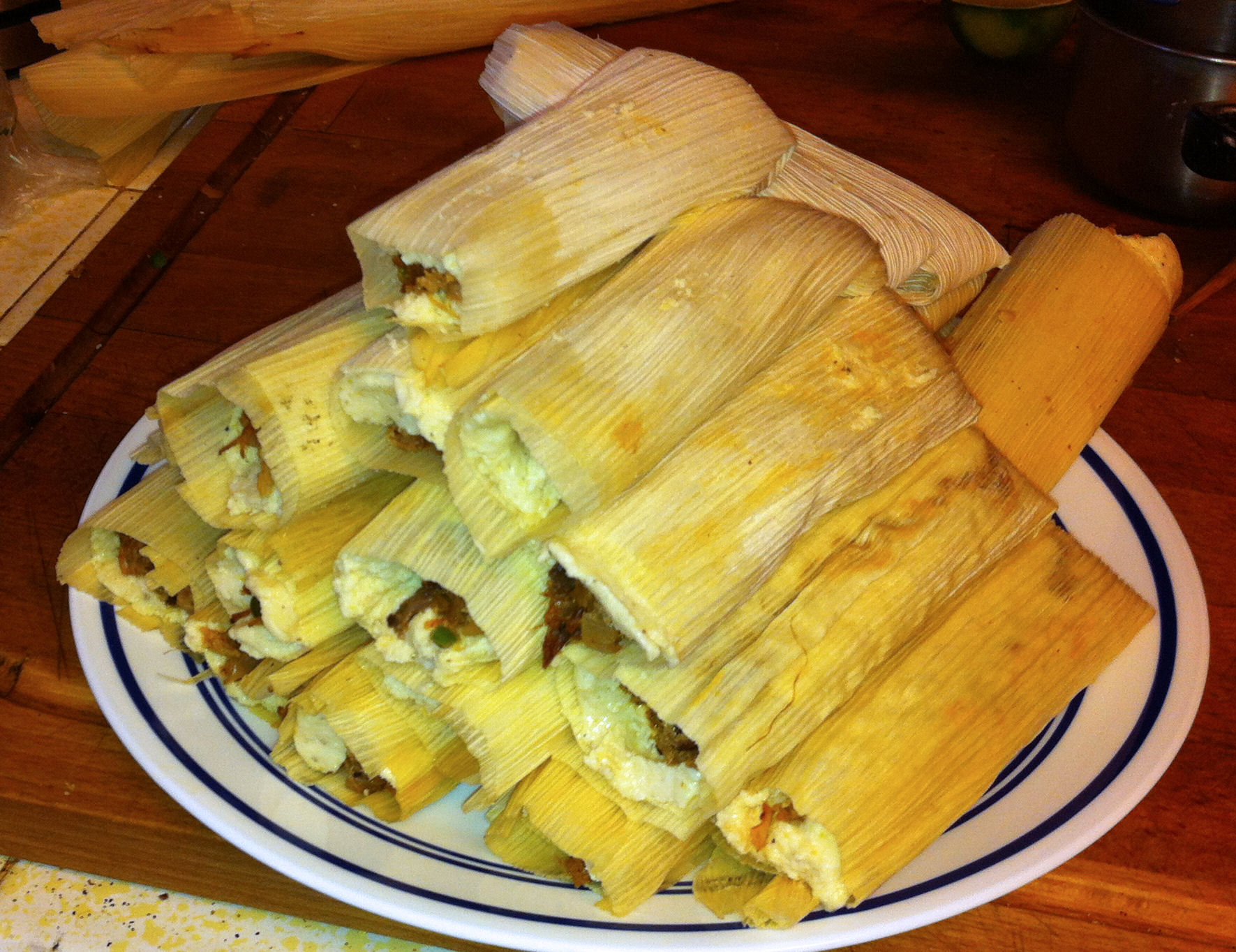
Ready to Steam or Freeze
Cooking the tamales
16. Place tamales vertically, open side up, in a steamer basket. If you do not have enough tamales for them to stay vertical in the basket, you may need to add a ball of tin foil to fill in the gap.
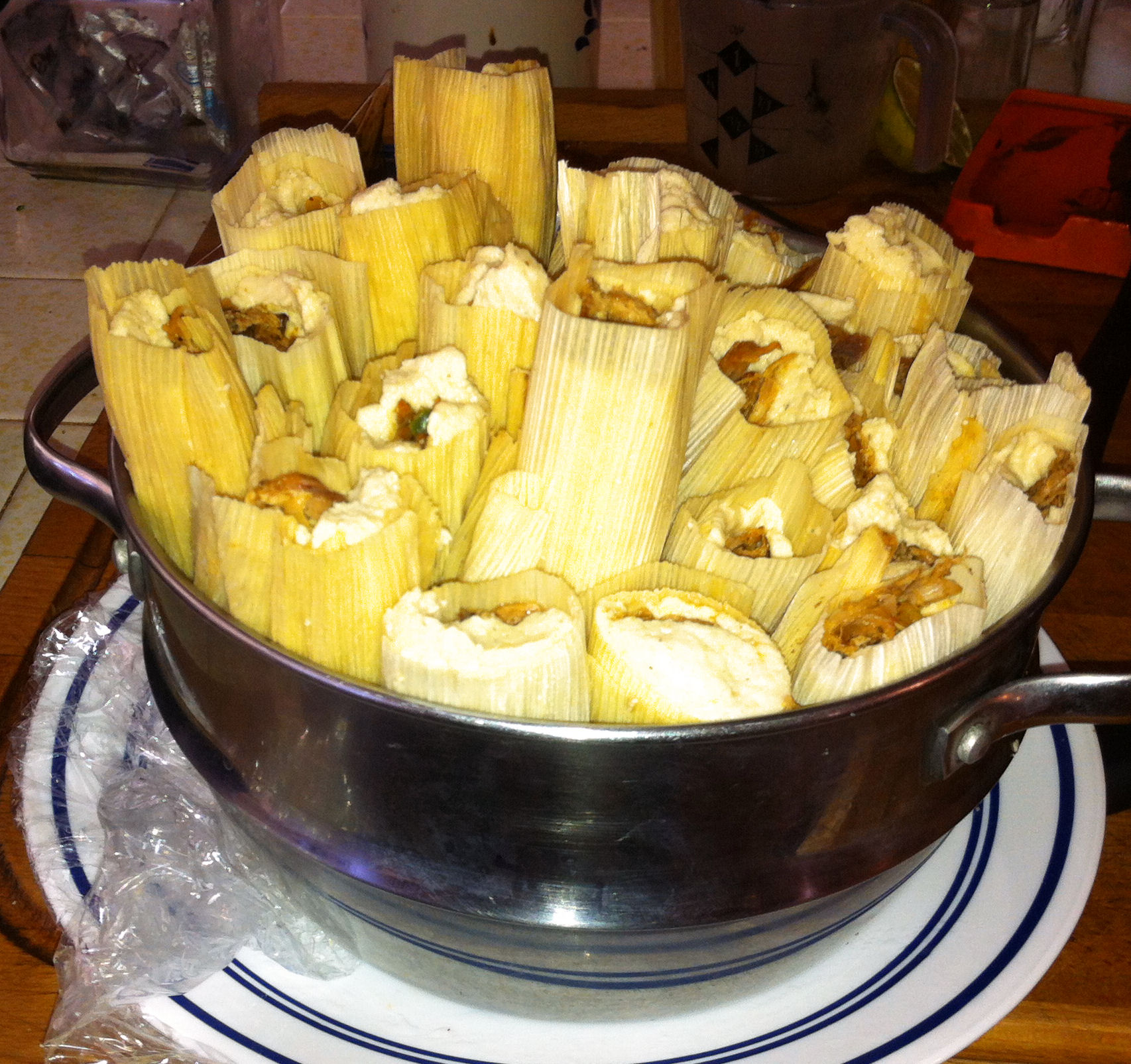
Ready for the Steamer
17. Place the steamer basket in a large pot and add enough water to steam for a long time. Do not add so much that the bottoms of the tamales are submerged.
18. Bring the pot to a boil and then put the cover on and turn the heat down to medium low. Steam the tamales for 1 hour, Check the water level occasionally. You do not want the water to all boil away. Add more water as necessary.
Serving the tamales
19. Unwrap the tamales at the table and serve with a sauce of warmed Mole Poblano.
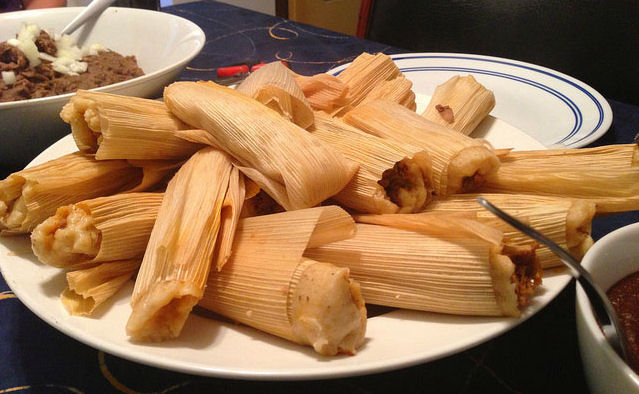
Karl’s Pork Tamales
 karllueck
 Miriam
 Jabberwocky Stew
Pingback: Karl’s Simplified Mole Poblano | Jabberwocky Stew