I felt like soup today and Eilene always complains that when I make miso soup there is never enough for seconds (or thirds). Today I decided that I would make enough even for her.

Karl’s Weekday Miso Noodle Soup
I felt like soup today and Eilene always complains that when I make miso soup there is never enough for seconds (or thirds). Today I decided that I would make enough even for her.
Karl’s Weekday Miso Noodle Soup
Filed under Main Dishes, Seafood, Soups
Onigiri is the Japanese equivalent of a PB&J sandwich, something to take for a school lunch or on a picnic. One of Eilene’s friends in Japanese class taught her how to do this a couple of years ago. Rice ball is a bit of a misnomer, since you make them into triangles.

Eilene’s Onigiri (Rice Balls)
Filed under Side Dishes, Starches, Vegan
Adapted from La Fuji Mama
Eilene’s school break ends tomorrow and she wanted sushi for dinner this Sunday. To make a change up from my usual maki and inari shushi I decided to do Chirashi Sushi, scatter sushi. From what I have read, this is what most Japanese housewives serve at home, partly (I understand) because they are intimidated by the Japanese master chefs who can make the cut maki’s cross section look like flowers or fish. Who knew? I just started making maki back when I was 20 because I liked it and didn’t know that I was competing with anyone.

Karl’s Chirashi Sushi
If you scan through my archive of recipes you may find a number base on Japanese cuisine. There is a reason for this that goes back to my early family life. During the Korean War (back around when I was born), my father was a major in
Filed under Main Dishes, Seafood
Miso soup is an almost daily staple of a Japanese diet. In the West many soups start with a base of chicken broth. In Japanese most soups start with dashi. The dried soup base, Hon Dashi, is sold in most supermarkets (at least on the West Cost). I have never been sure how much to use so I think I have been using too little, because if there are instructions on the bottle they are all in Japanese. One of the websites I was on while researching this meal was recommending 1 tsp. of Hon Dashi per cup of water. Since the bottles only contain about three tablespoons, it would take almost a whole bottle to make a soup for the family. See Karl’s Yosenabe for instructions on making it from scratch.
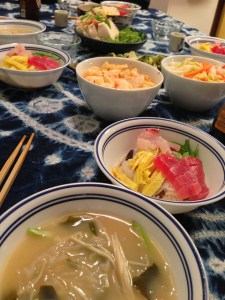
Karl’s Miso Soup
at the bottom
Filed under Soups
This dish has its origin in our time in Chengu, China. We lived in the Foreigner’s Hotel. This was known as “the Panda House” and, yes, with its fenced in garden, it did look just like the Panda House at the local zoo. Many mornings we would walk down stairs to eat at the hotel restaurant rather than cook in our apartment. This was partly because the gas was so iffy – the local children thought it was a great joke to shut off the gas valve to the foreigner’s apartments.
Filed under Pickles, Side Dishes, Vegan, Vegetables
Based on a www.thekitchn.com recipe
In this variation I was reminder of a couple of technique by Nami’s Just One Cookbook. When you are making pickled vegetables you can play with more than just the flavors. If all of your pickles are the same shape it is just boring. The visual appearance of the dishes is a very important ingredient in Japanese Cuisine.
Filed under Pickles, Side Dishes, Vegan, Vegetables
Adapted from http://rasamalaysia.com which adapted it from “Japanese Hot Pots: Comforting One-Pot Meals”
Yosenabe is a type of nabemono or one-pot dish. At first glance the Yosenabe recipes on the Internet were very similar and the directions were few (i.e. chop everything up, throw it into the pot and cook until done).

Karl’s Yosenabe Dinner
The traditional nabe pot is a fairly deep, round bottomed pot with a wooden lid that fits inside the edges of the pot. I am using a wide 2 inch deep flat bottom electric pot. For the amount of soup I made, a 3 inch deep pot would have been better. I struggled to keep the soup from boiling over onto the table.
Filed under Main Dishes, Seafood, Stews
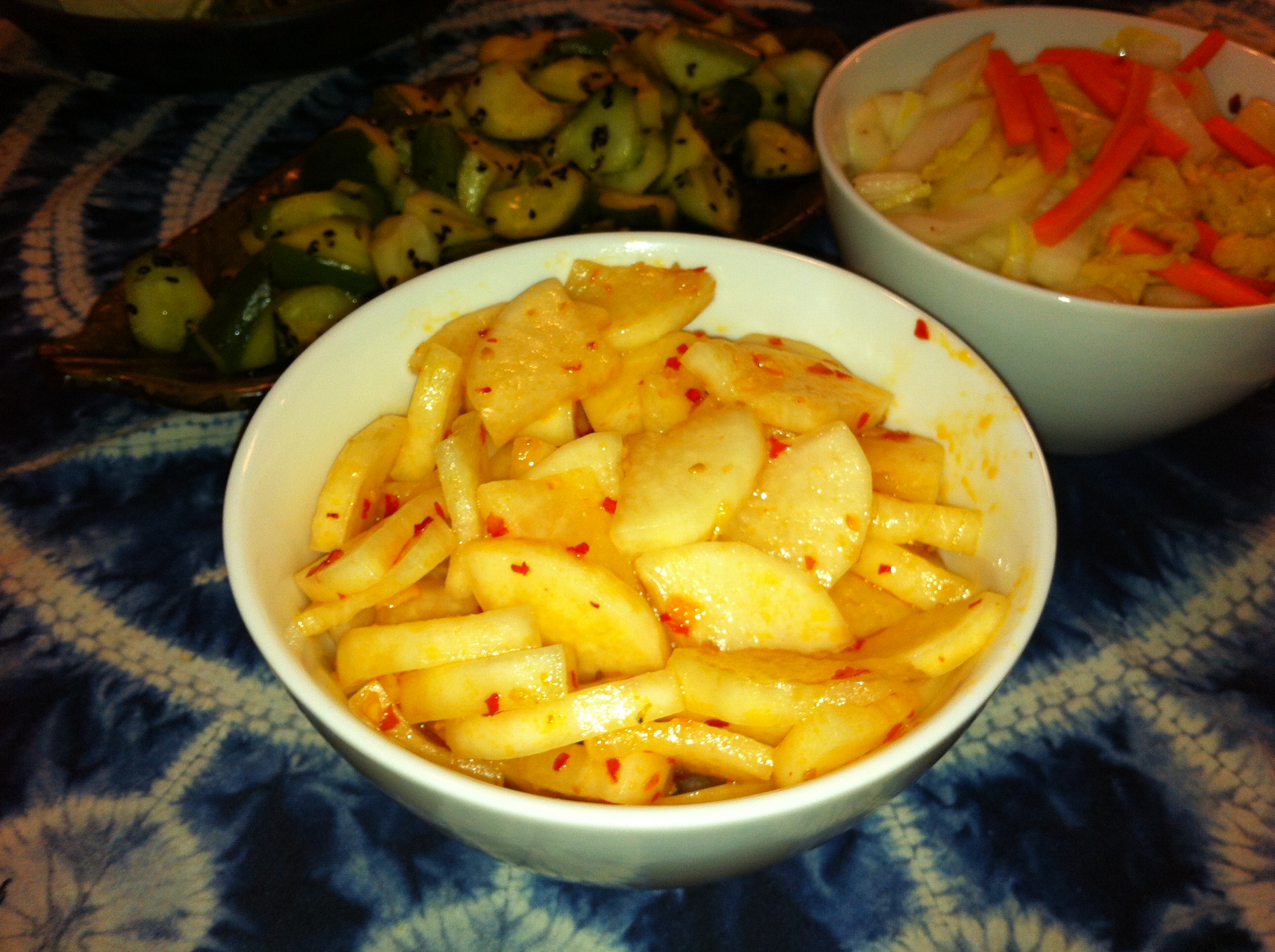
Daikon radishes tend to be very large, as much as 18 inches long and 2½ inches thick. Even though I bought the smallest radish in the bin I still had half a radish left after I had cut up the portion I was using in the Yosenabe. What to do with it? I had already made cucumber pickles, but how about daikon pickles? I switched the radish for the cucumbers in my Quick Pickled Japanese Cucumbers. Since the radish is a bit firmer than the cucumbers, I gave it an hour in the salt before rinsing it off.
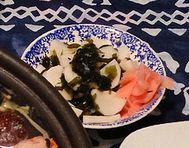
Karl’s Quick Pickled Daikon Radish
Filed under Pickles
Based on a www.thekitchn.com recipe
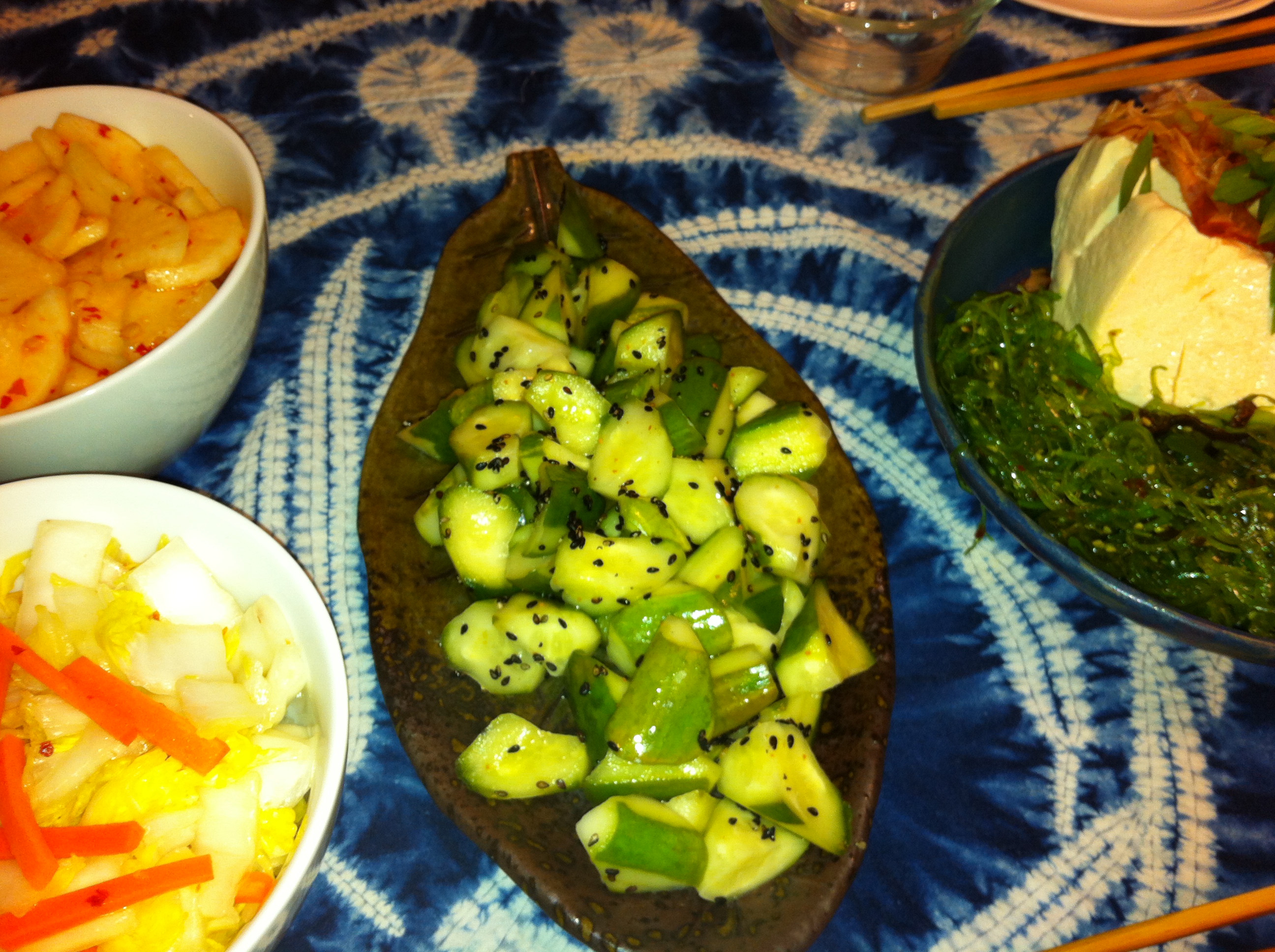
I did not want to make the same pickles I did last time so I changes the seaweed I was using and added some bonito shavings to these pickles.
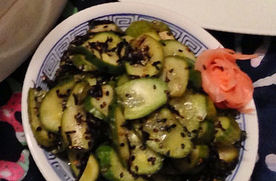
Karl’s Quick Pickled Japanese Cucumbers II
Filed under Pickles, Side Dishes, Vegan, Vegetables

Karl’s Quick Pickled Japanese Cucumbers
I forgot to start the pickles I was planning to make the day before, so I wanted to come up with a faster way to make Japanese cucumber pickles. I decided to use the technique of Persian hot pickles, heating the pickling liquid and the cucumbers to speed up the process. They came out very much like my favorite cucumber pickles from Gombei.
Filed under Pickles, Side Dishes, Vegan, Vegetables
 karllueck
 Miriam
 Jabberwocky Stew